
Welcoming a baby into the family is such a special time in our lives. Along with that little bundle of joy comes engorged breasts and inevitably frozen breastmilk. However, that breast milk may never be used if you are nursing full time. Making your own skin loving, baby friendly breastmilk soap bars is a great way to use up any extra frozen milk you have at home.
This post may contain affiliate links. As an Amazon associate, I earn from qualifying purchases.
What you need to make breastmilk cold process soap
If you’ve never made soap before, read this first and then meet me back here.
To make this soap you’ll need a kitchen scale, some stainless steel/glass/ceramic bowls, a meat/infrared thermometer, and a mold. A stainless steel strainer will also be handy when we go to add our milk lye solution to our oils. You’ll also need an immersion blender, unless you want to mix your soap batter with a whisk for an hour 🫠
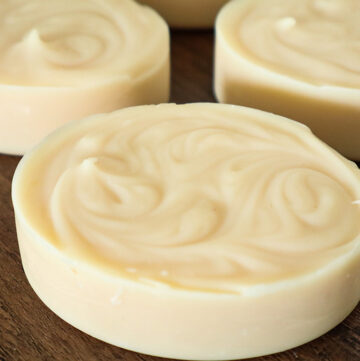
You can use any mold you have on hand or even a glass bread pan lined with parchment paper. I made this recipe to fill these six cavity oval molds with each bar weighing approximately 3oz. You can certainly double either recipe to fill a larger mold, such as this loaf mold.
Because we will be working with lye, you’ll need some simple safety equipment, too. Rubber or nitrile gloves, eye protection, and be sure to wear long sleeves.
Soap ingredients for 100% olive oil soap
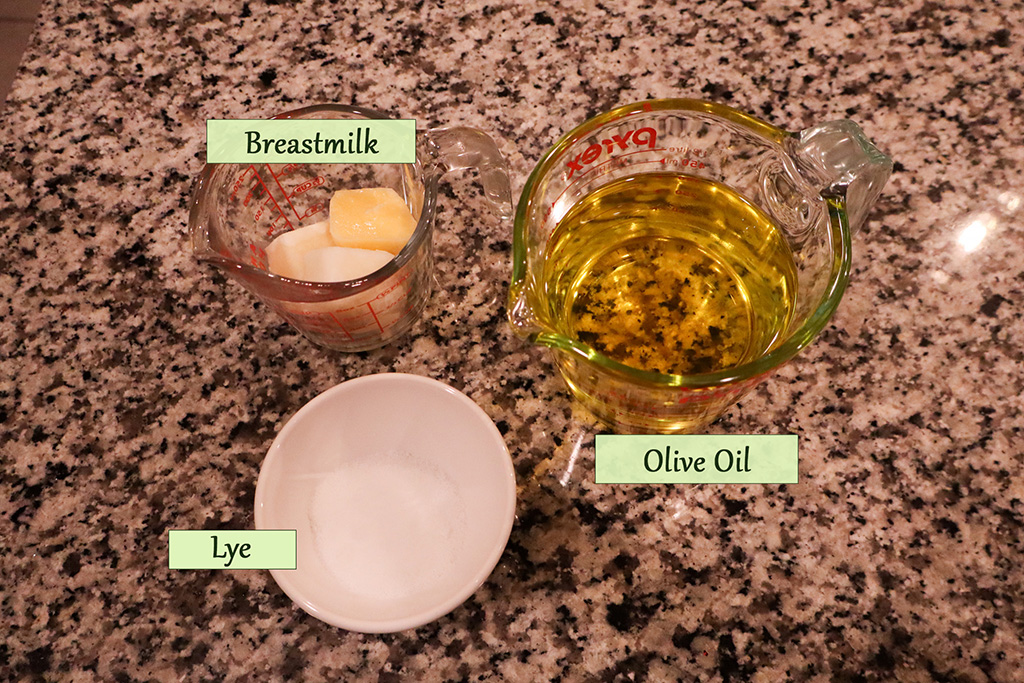
Olive oil is so gentle on the skin. Combine that with your unique, curated specifically for your baby, breastmilk and you’ve created a deeply nourishing bar soap for your little one. This soap recipe is great for all ages but especially for a young infant.
For this soap you’ll need:
- olive oil – the best you can comfortably afford
- lye – NaOH
- breastmilk – preferably frozen in cubes for easier measuring (or weigh out the needed milk first and freeze that in cubes for later)
Soap ingredients for 75% olive oil soap
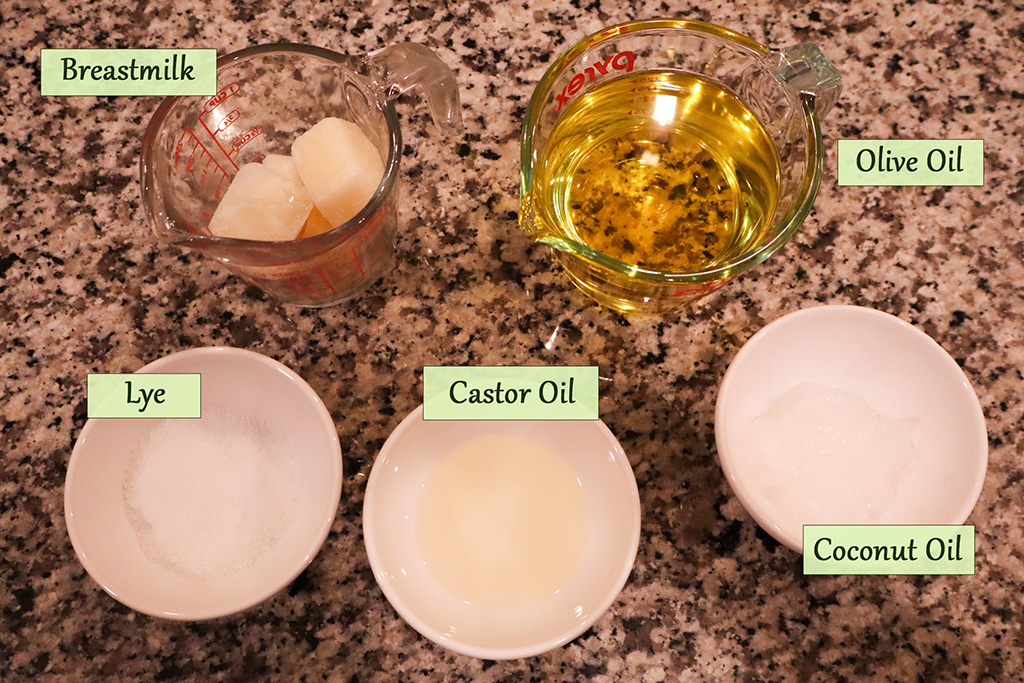
This combination of oils is great for an older baby who needs a little more cleansing power out of their soaps while still being gentle on the skin.
For this soap you’ll need:
- olive oil
- coconut oil – refined or unrefined. This oil gives us some extra cleansing power
- castor oil – a powerhouse for the skin and hair. It’s nourishing ricinoleic acid imparts some anti-inflammatory properties to the soap.
- lye – NaOH
- breastmilk
How to make breastmilk soap
Get your safety gear on, tie back your hair and let’s get started. 🙂
Weigh out the ingredients
As with any soap recipe, the first step is to weigh out all of our ingredients. First weigh out all the oil needed. For the 75% olive oil soap, weigh out the oils in separate bowls. In a heatproof glass bowl weigh out the milk (if you didn’t weigh before freezing), and lastly we will weigh out the lye.
Measure everything in separate containers and weigh the milk into the container you will use for making your lye solution.
If you are working with the 75% olive oil soap recipe, after measuring out the needed coconut oil go ahead and melt it. Combine all the oils in a large stainless steel bowl and set aside.
Make the lye solution
Because we are working with milk in this recipe, we have a couple extra steps we need to take to safely make our lye solution. Sugar and lye react to create a lot of heat which can very quickly scald our milk and produce a nasty odor. So, our goal is to keep our lye solution as cold as possible.
Fill a large glass or stainless steel bowl with ice water, this will serve as an ice bath. Place the container with the milk into the ice bath. Sprinkle some of the lye over the frozen milk, stirring a bit between each addition. It will not take long at all for the milk to start melting. Keep an eye on the temperature as you go, trying not to go over 90F.
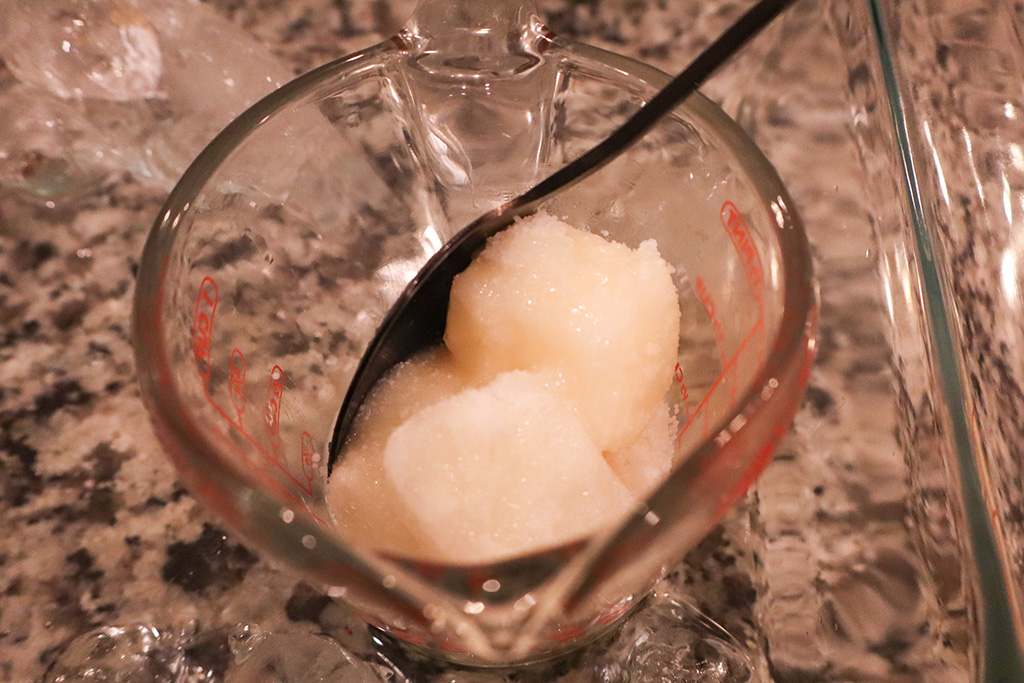
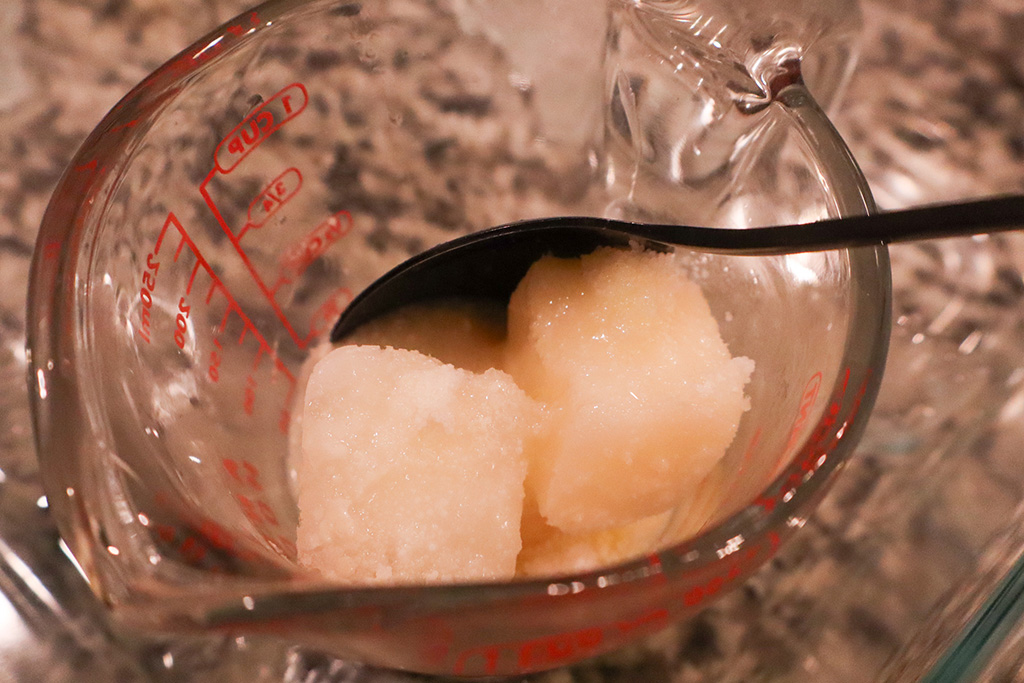
Continue adding the lye and stirring until all the lye is added and is fully dissolved.
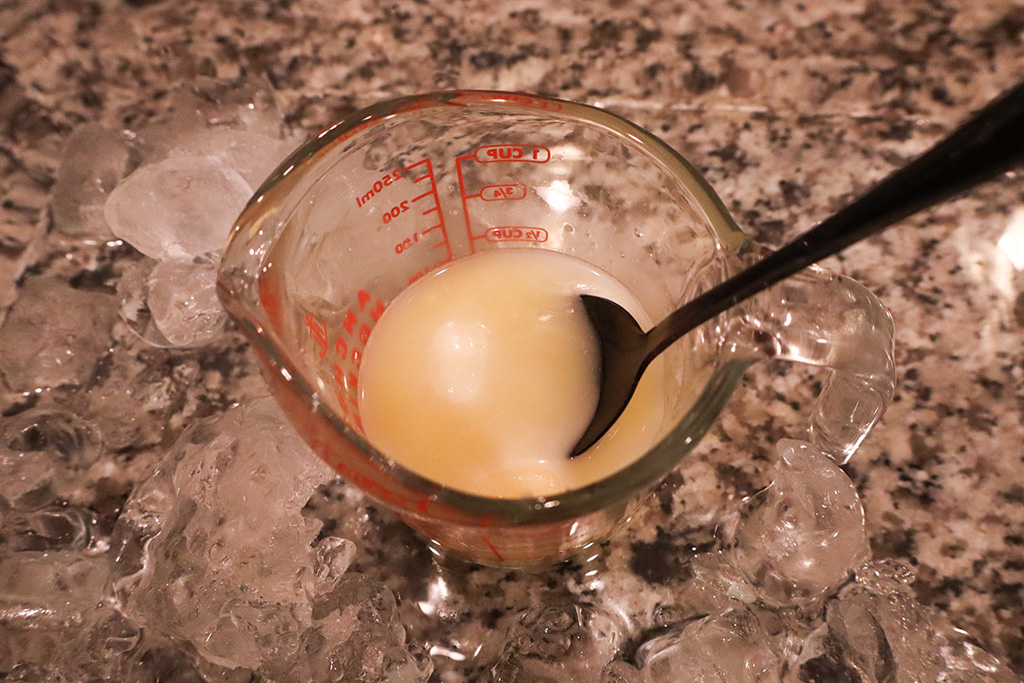
In this picture there are still small pieces of ice cubes left. Continue stirring until the milk has fully melted and lye is dissolved. The milk will thicken slightly while stirring.
Add lye solution to oils
Pouring through a wire mesh strainer, add the lye solution to the oils. Burp your immersion blender before turning it on to remove any air bubbles trapped under the bell. Pulse the blender for 20-30 seconds then stir the mixture. Repeat that process until the soap batter reaches trace.

Trace is when the soap batter begins to thicken. It’ll have the consistency of gravy when it reaches light trace.

It will take about 5-10 minutes for the 100% olive oil soap to reach trace. Whereas the 75% olive oil soap reaches trace a few minutes faster thanks to the coconut oil.
Mold the soap batter & Cure
Pour the soap batter into your molds. If you’re using the oval molds, like I am, place the molds on a parchment paper lined baking sheet or cutting board. Place the molded soap into fridge for 8-12 hours or overnight.

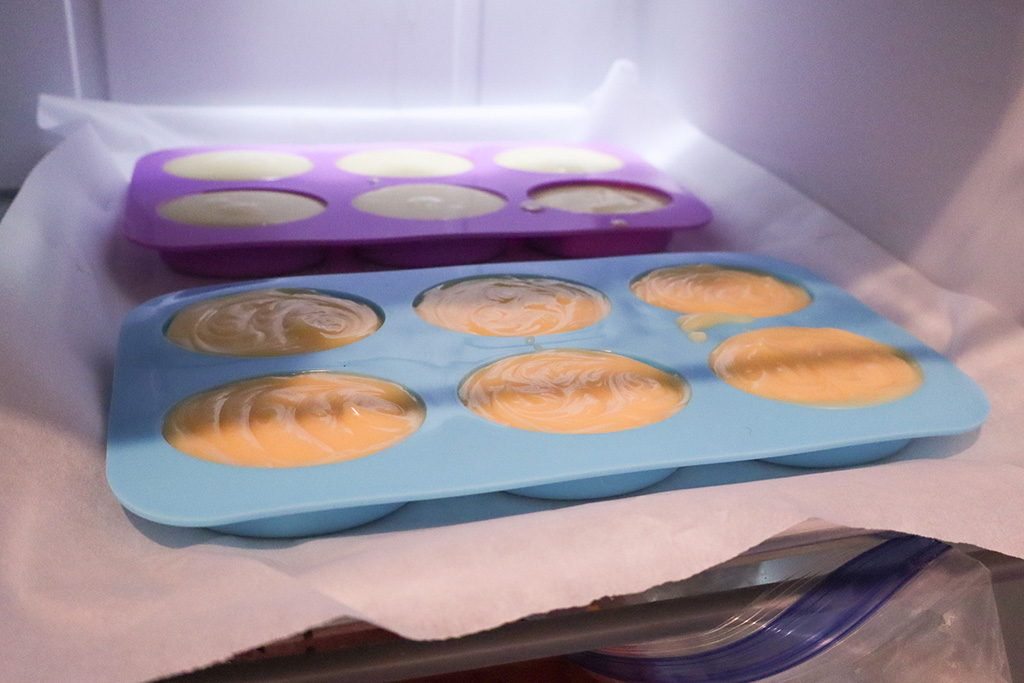
Next, remove the tray from the fridge and place somewhere safe and out of the way for the next 24-48 hours. Castile soap takes a bit longer to harden up than other oil/fats. Give it a good amount of time to set up before unmolding.
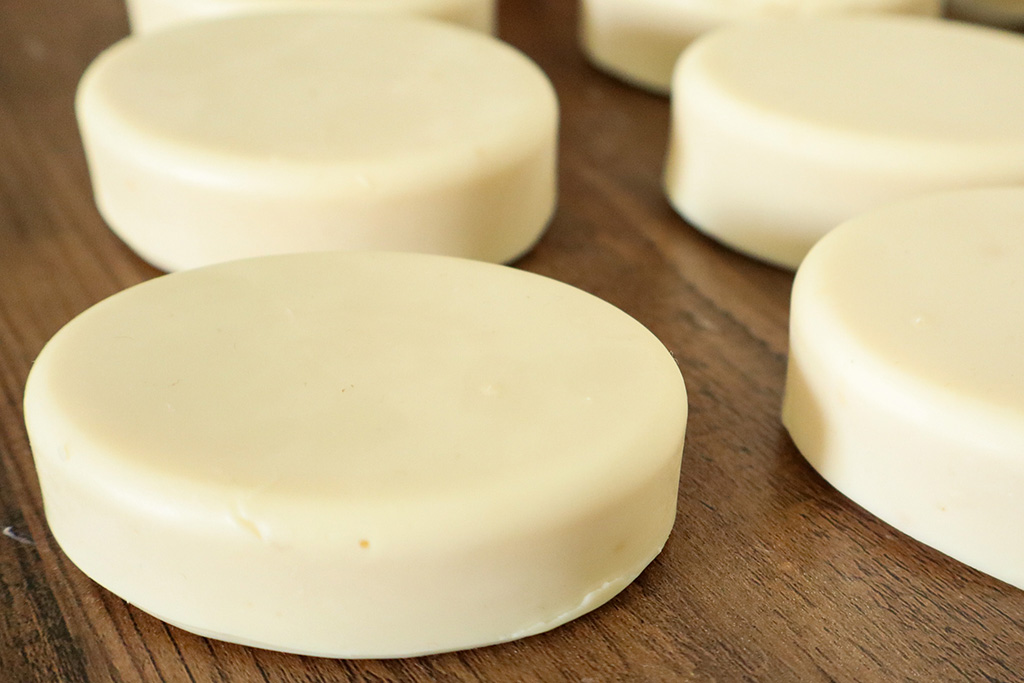
Your freshly unmolded bars may feel slightly tacky. This is perfectly normal and will fade as your bars cure. Set your bars in a well ventilated area for 4-6 weeks before use.
As a reminder, this is soap not a detergent. It is not tear free. When using this soap for your baby, be very careful to keep the soap out of their eyes.
And that’s all. Hopefully the instructions make sense and my baby brain isn’t too bad 😅 If you have any questions drop them down in the comments and I’ll help you out 🙂
Happy soaping! 😊
Breastmilk Cold Process Soap (100% olive oil)
Equipment
- kitchen scale
- immersion blender
- stainless steel/glass/ceramic bowls
- stainless steel spoon
- rubber or nitrile gloves
- eye goggles/glasses
- silicone oval molds
Ingredients
- 368 g olive oil
- 92 g breastmilk frozen in cubes
- 45 g lye NaOH
Instructions
- Before beginning make sure you can work distraction free for at least two hours. No kids or pets around when you are making soap. Wear your safety gear and tie back your hair if it's long.
- Prepare silicone oval molds by placing on a parchment paper lined baking sheet. Set aside.
Weigh out the ingredients
- In separate bowls, measure out your olive oil, frozen breast milk*, and lye. Measure the oil into a large bowl to accommodate the addition of the lye solution later.
Make the lye solution
- Optional, prepare a large bowl with ice and water to act as an ice bath to keep the temperature of the lye solution low. Place the heatproof glass with the frozen milk into the ice bath.
- Carefully sprinkle a bit of lye over the top of the frozen breastmilk. Allow it to melt the milk a little and gently stir. Sprinkle some more lye, stir. Repeat until all the lye is added. Stir the mixture until the milk is melted and the lye dissolved.
- Check the temperature of the lye solution as you go. Try to keep the temps under 90F. When the lye solution is within ten degrees from the temperature of the olive oil (about 70-80F or room temperature for us Southerners), move on to the next step.
Make the soap batter
- Pouring through a stainless steel mesh strainer, carefully add the lye solution to the olive oil. Place your immersion blender into the olive oil and "burp" it to release any air trapped under the bell. Pulse for 20-30 seconds then stir. Repeat until the batter reaches trace, about 5-10 minutes.
Mold & Cure
- Pour the soap into your prepared molds. Place the tray with the molds into the fridge overnight or up to 12 hours.
- Pull soap bars from the fridge but keep them in the molds for a total of 48 hours. Once they've hardened, remove them from the molds and set aside in a well ventilated area to cure for 4-6 weeks before use.
Notes
- weigh out the breastmilk while it’s still fresh and freeze it in cubes for use in this recipe. You can also weigh out the milk after it’s frozen. It’s fine if you have a couple grams more or less than the recipe calls for.
Breastmilk Cold Process Soap (75% olive oil)
Equipment
- Digital kitchen scale
- immersion blender
- meat/infrared thermometer
- stainless steel/glass/ceramic bowl
- stainless steel spoon
- Rubber/nitrile gloves
- eye protective goggles/glasses
- silicone oval molds
Ingredients
- 276 g olive oil
- 55 g coconut oil
- 37 g castor oil
- 47 g lye NaOH
- 96 g breastmilk frozen in cubes
Instructions
- Before beginning make sure you can work distraction free for at least two hours. No kids or pets around when you are making soap. Wear your safety gear and tie back your hair if it's long.
- Prepare silicone oval molds by placing on a parchment paper lined baking sheet. Set aside.
Weigh Out Ingredients
- In separate bowls, measure out your olive oil, castor oil, coconut oil, frozen breast milk*, and lye.
- Melt the coconut oil. Combine all oils into a large bowl.
Make Lye Solution
- Optional, prepare a large bowl with ice and water to act as an ice bath to keep the temperature of the lye solution low. Place the heatproof glass with the frozen milk into the ice bath.
- Carefully sprinkle a bit of lye over the top of the frozen breastmilk. Allow it to melt the milk a little and gently stir. Sprinkle some more lye, stir. Repeat until all the lye is added. Stir the mixture until the milk is melted and the lye dissolved.
- Check the temperature of the lye solution as you go. Try to keep the temps under 90F. When the lye solution is within ten degrees from the temperature of the oils (about 70-80F or room temperature for us Southerners), move on to the next step.
Make Soap Batter
- Pouring through a stainless steel mesh strainer, carefully add the lye solution to the olive oil. Place your immersion blender into the olive oil and "burp" it to release any air trapped under the bell. Pulse for 20-30 seconds then stir. Repeat until the batter reaches trace, about 5 minutes.
Mold & Cure
- Pour the soap into your prepared molds. Place the tray with the molds into the fridge overnight or up to 12 hours.
- Pull soap bars from the fridge but keep them in the molds for a total of 48 hours. Once they've hardened, remove them from the molds and set aside in a well ventilated area to cure for 4-6 weeks before use.
Notes
- weigh out the breastmilk while it’s still fresh and freeze it in cubes for use in this recipe. You can also weigh out the milk after it’s frozen. It’s fine if you have a couple grams more or less than the recipe calls for.
I wish I had been able to produce enough breastmilk to be able to do this. It’s such a wonderful idea and so healthy for you.
Luckily any milk will work in this recipe. So if you’ve got littles or family members with sensitive skin this recipe would be great for them 🙂
This is incredible! I was been fortunate to have an oversupply I for just ~3 weeks and now I’ll be making these. Thanks so much for sharing!!
This is so brilliant! Thanks for sharing.
Awesome recipe, such a good way to take advantage of the benefits of breast milk!
I had no idea this could be done! I am almost done nursing my 1 year old so I’m not sure I have enough in me to do this, but I’m saving this in case, and also pinning and sharing so people know!
Thanks! I only just realized that breastmilk could be used for this, I’m kicking myself for throwing away frozen milk in the past 😅 You can also swap out the breastmilk for any other milk and it’ll be great for your little one ❤️