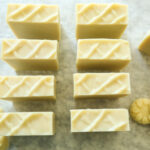
Shea Butter & Tallow Shampoo Bars
Natural hair care does not need to be complicated or ridiculously expensive. These shea butter and tallow shampoo bars use only six ingredients and no immersion blender necessary!
Yield: 10 4oz bars
Cost: $10.56
Equipment
- Digital scale
- stainless steel, glass, or ceramic bowls
- rubber or nitrile gloves
- eye protection
- stainless steel whisk
- 42oz loaf mold with silicone insert
Materials
Lye solution
- 114g lye, NaOH
- 295g distilled water
Fats & Oils
- 439g shea butter raw, unrefined
- 176g beef tallow grass fed
- 131g castor oil
- 132g coconut oil
Essential Oils, Optional
- 26g essential oils lavender, rosemary, lemongrass, tea tree, and cedar wood make good options
Instructions
- Before beginning, ensure that all distractions are put away. Kids are in bed or being looked after by another adult, and pets are contained.
- Weigh out all ingredients in separate bowls, leaving the lye to weigh out last. Make sure you are wearing your protective gear when handling the lye!
- Combine oils into a stainless steel pot or bowl and set over low heat.
- Working in a well ventilated area, add lye to the water, never the other way around (snow falls on the lake). Mix thoroughly with a stainless steel spoon. You may want to wear a face mask or hold a rag over your mouth and nose to ensure you do not inhale any of the fumes. Once well mixed, set aside the lye solution in a safe space.
- Every few minutes gently mix the oils, breaking apart any large chunks until all the oils and fats have melted. The temperature should be close to 120F. At this point the lye solution and oils will be close in temperature. Double check to be sure, as long as the lye and oils are within ten degree's of each other go ahead to the next step.
- Slowly pour the lye solution into the oils. You can pour over the handle of the whisk or over a rubber spatula to prevent air bubbles in the soap batter. Whisk continuously for about 1 minute or until the oils and lye solution have fully emulsified and the batter starts to thicken. At this point you can add any essential oils you'll be using.
- Gently pour the soap batter into your mold. Wiggle around the mold and gently bang it on the counter or floor to release any air bubbles and smooth out the top. Decorate the top as desired and set aside the mold in a safe place. You can also wrap the mold to trap in the heat while it goes through saponification.
- After resting in the mold for about 24 hours, unmold the soap. Using a sharp knife cut into 1 inch wide bars. Each should weigh about 4-5oz. Set aside in a well ventilated area to cure for 4-6 weeks. Turning every couple days to allow the bars to dry evenly.
Notes
The cost to produce these bars will vary depending on how much oil/fat you buy at once. Buying in bulk will always reduce the cost per ounce.
This soap will thicken quickly which is why I've opted to use a whisk instead of an immersion blender. You'll only have to mix for a minute or so before reaching trace. Trace is when the soap reaches a pudding like consistency where you can drizzle the soap batter over the top and it rests on top instead of immediately sinking back into the mixture.
To help prevent soda ash formation, you can spritz the top of your soap with rubbing alcohol. Soda ash is a harmless substance that's created when unsaponified lye reacts with the carbon dioxide in the air. You can wipe this off after the soap has hardened, but it's not the prettiest thing in the world. The soap is still perfectly good to use, though.
If you've never made soap before check out how to safely make cold process soap before beginning.
When washing your hair with a shampoo bar, follow with an acidic rinse. You can use 1/4 cup apple cider vinegar diluted in 1-2 cups of water, or for you sensitive noses, 1tbsp of citric acid in 1-2 cups of water. Allow this to sit in your hair for a minute or two before rinsing out.