
Tallow is probably one of the most versatile ingredients to keep in your home. It’s great for cooking, baking, making balms and herbal infusions, skin cream and soap bars. While I love getting creative with different mixes of oils in my soaps, sometimes, nothing beats a simple, plain ol’ tallow soap bar.
If you have any sensitivities to other kinds of oils, such as coconut or shea butter, a plain tallow soap bar might be just the thing for you.
This post may contain affiliate links. As an Amazon associate I earn from qualified purchases at no extra cost to you. I promise I’ll only ever share things that I personally use and love.
Ingredients for our tallow soap bar
Tallow
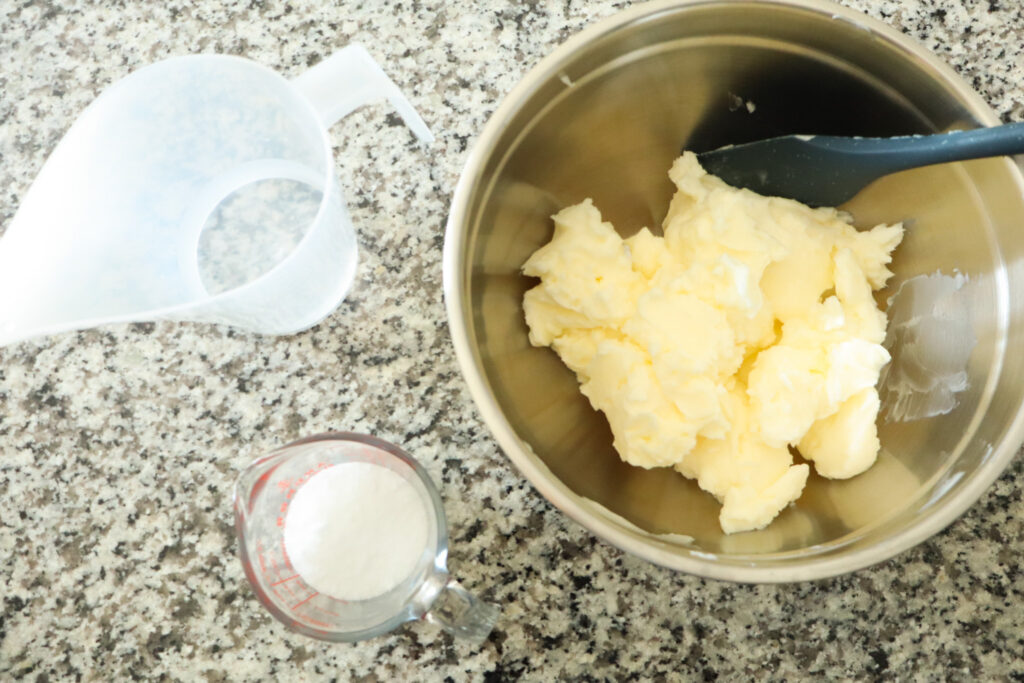
Obviously we will need tallow. You can render this yourself from suet purchased from a butcher. Or, better yet, if you have your own cattle you can harvest the fat from them. However, for the rest of us who lack a butcher or cattle, buying prerendered tallow is a great option. Buy tallow from grass fed and finished beef for the best nutrient profile.
This recipe has been calculated using beef fat. If using tallow from deer, bison, sheep or goat, the recipe will need to be run through a lye calculator. These other forms of tallow have a different SAP value than beef tallow (amount of lye needed to turn the fat into soap). I use soapcalc.net.
For this recipe we will be using 32oz or 907g.
Distilled water
Next is water. For the best soap results, use soft, filtered water. We buy distilled since we don’t have access to soft water in the wild, or the means to filter rain water. Distilled water is cheap and one gallon will make you pounds and pounds and pounds of soap.
We will need 8.7oz or 245g.
Lye
Without lye, soap would not exist. While lye can be dangerous when used carelessly, it’s not something to fear. With proper respect and some simple safety gear, you can handle lye with confidence and enjoy made-from-scratch natural soaps.
We’ll need 4.3oz or 122g
Check out this post to learn more about safely handling lye for soap making.
Equipment you’ll need to make tallow soap bars
You’ll need at least three bowls/containers. One for the tallow, water and lye. We will weigh these all out separately at first.
I like to use stainless steel bowls and heat proof glass for my soap making, but you can also use some thick plastic or ceramic.
Whenever you make soap you’ll measure your ingredients by weight, so a good digital scale is a must. This is the kind I have and I love it.
You’ll need an immersion blender unless you want to whisk caustic soap batter for a half an hour 😊
A rubber spatula and stainless steel spoon will also be helpful 😀
How to make tallow soap bar
Weigh out ingredients
Weigh out all ingredients in separate containers. I like to weigh out the fat first, then the water, and finally the lye.
Lye is hygroscopic, so it’ll get wet and clumpy if left out too long exposed to humid air. If you are in a dry climate this is probably not something you need to worry about.
Melt the tallow and make your lye solution
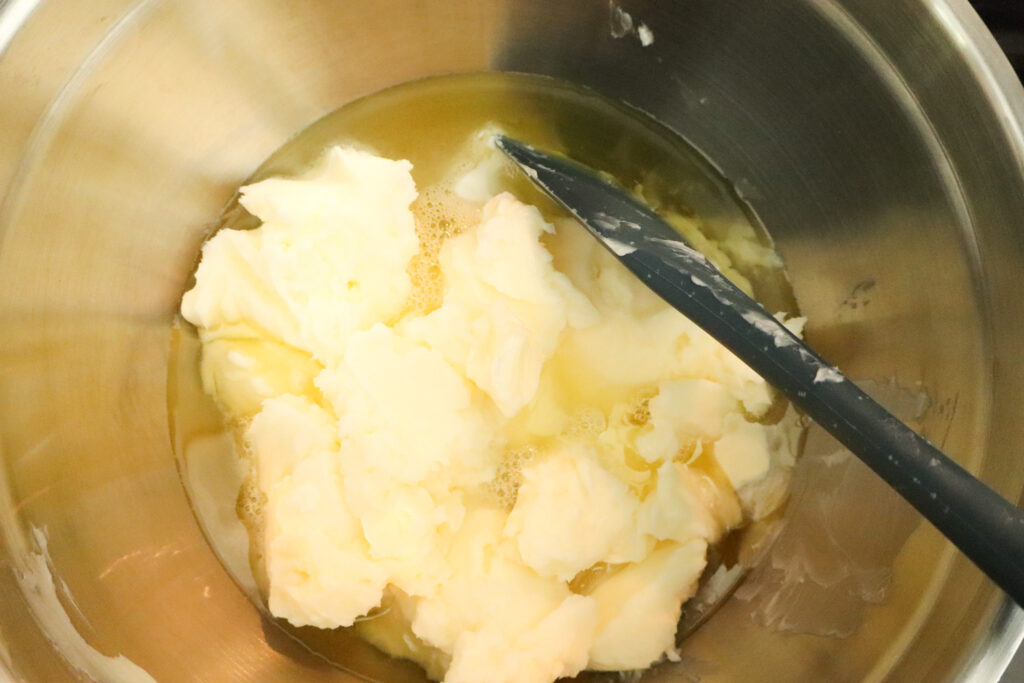

Set your tallow either in a crockpot on low, or in a pot or stainless steel bowl over low heat on the stove. This is why I love stainless steel bowls. I can weigh my tallow in it, put it on the stove and add the lye solution to it. No need to transfer to another vessel 🙂
Once you’ve done that, make your lye solution.
Work in a well ventilated area and make sure you are wearing your protective gear! Add lye to the water, snow falls on the lake, and stir with a stainless steel spoon.
This will generate a bit of heat. Do not inhale the fumes the solution will make. You might consider wearing a face mask.
Check the temps and make your soap batter
Once the tallow has fully melted it’s time to check the temperature’s of the fat and the lye solution. Our goal is to have the fat and lye about ten degrees or so of each other. Because we are working with saturated fats exclusively, it’s a good idea to soap at slightly warmer temperatures than a typical cold process soap.
Anywhere within 110-140F is good.
Once the fat and lye solution are under 140F and within ten degrees of each other it’s time to make the soap batter.
Pour the lye solution into the melted tallow, pouring over the shaft of your immersion blender to reduce air bubbles in the fat. Burp your immersion blender to remove any air that’s trapped under the bell.
Pulse for about 30 seconds, stir. Repeat until the batter has reached trace. Trace is when the soap batter has fully emulsified and begins to thicken. It looks something like gravy or pudding.
Pour the soap batter into your soap mold. Wiggle it around gently and bang it on the counter to release air bubbles and smooth out the top. You can decorate the top as desired or simply leave it flat. Cover the soap and place somewhere well out of reach of kids for the next 12-24 hours.
Mold, cut and cure
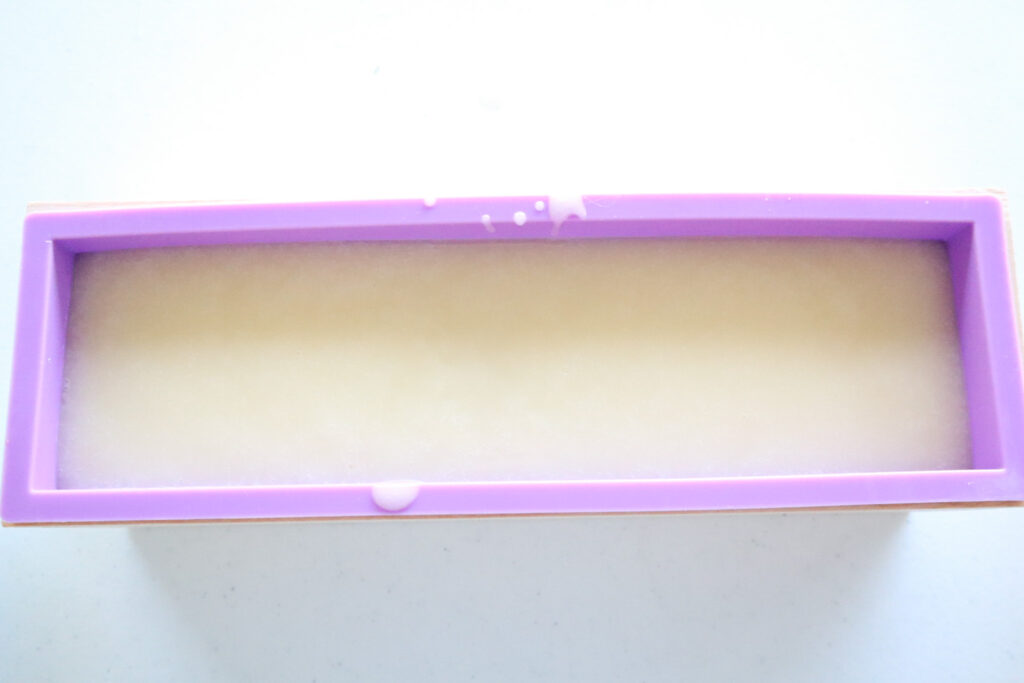
After the soap has set for 12-24 hours it’s time to cut our bars and set them aside to cure.
Carefully unmold the soap. If it still feels a bit soft give it more time to saponify in the mold. Saturated fats tend to set up quickly when made into soap, so this shouldn’t take too long.
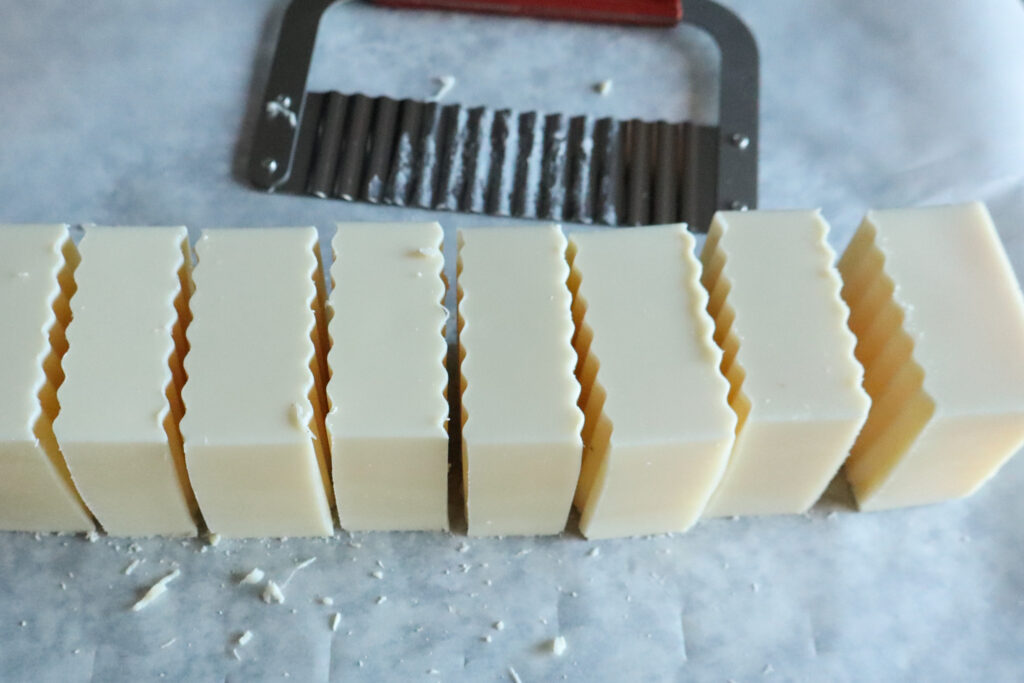
Cut into 1″ widths. You should be able to get ten bars each weighing between 4-5oz, plus a little extra.
Set aside the bars of soap in a well ventilated area out of direct sunlight to cure for 4-6 weeks before use.
Scenting your homemade tallow soap bars
To keep this soap a true natural soap, you can add essential oils to the mix. You’ll need about 27g of essential oils for this whole batch of soap. Lemongrass and lavender are some of my personal favorites. Add essential oils after the batter has reached trace (before you mold it). You can either whisk this in, or use your immersion blender if the batter hasn’t gotten too thick.
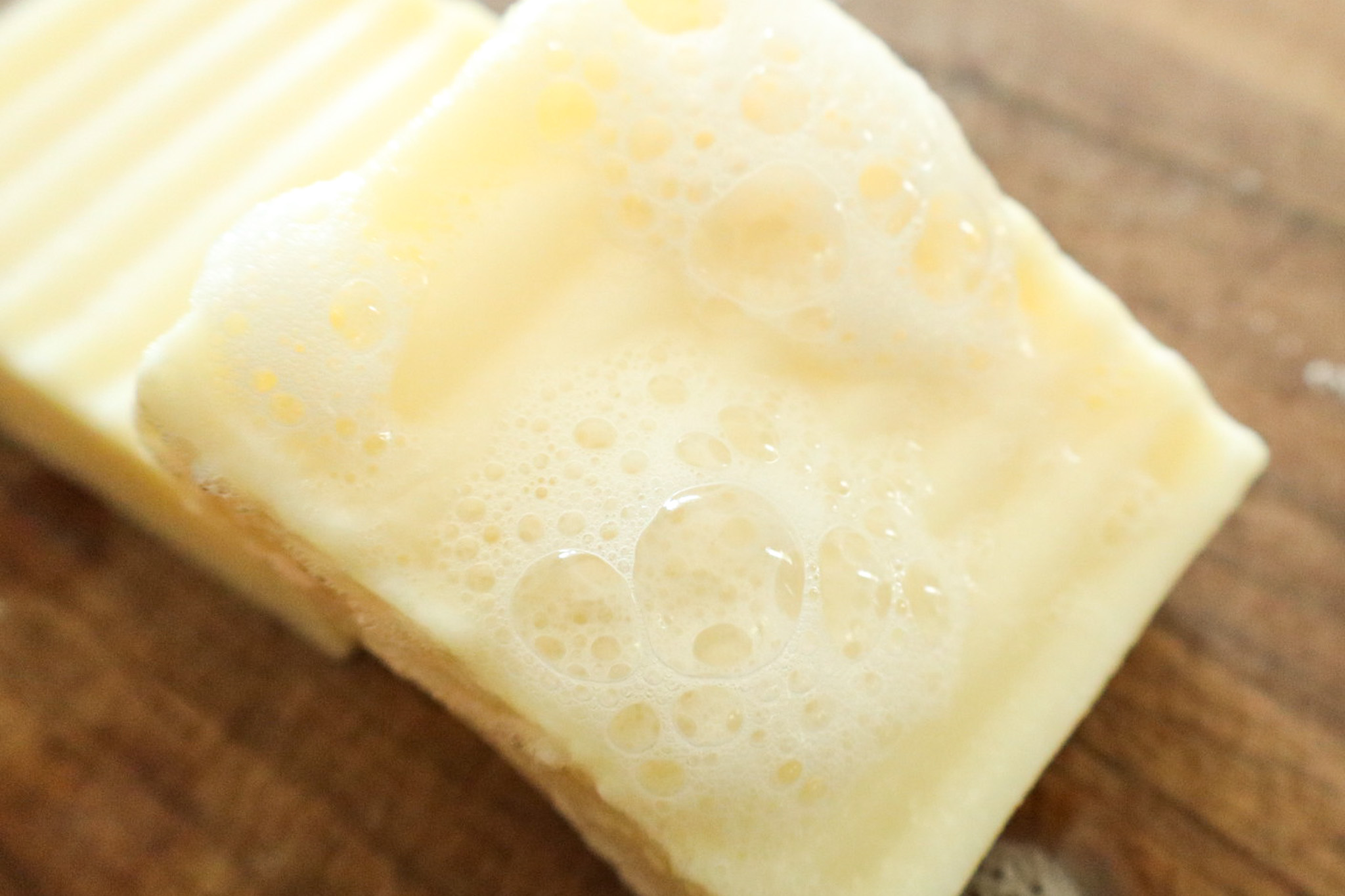
Personally, I’m not a fan of unscented tallow soap. It kinda smells… old… to me. However, with a lovely blend of essential oils, plain jane tallow soap is one of my favorite soaps to make and use. It has a lovely creamy lather and beautiful bubbles 😀
Kinda obsessed with bubbles at the moment 😂

If you’ve got sensitive skin, or allergies to common plant based oils (any coming from the tree nut families) then tallow soap may be just the thing for you. With all of tallow’s amazing benefits, this soap will leave your skin feeling better and healthier than before.
Happy soaping!

Basic, Three Ingredient Tallow Soap Bar
Ingredients
Equipment
Method
- Before beginning ensure that you can work undisturbed for 1-2 hours. Kids and pets should be away from any soaping adventures. Make sure you are wearing your safety gear.
- In separate containers, weigh out tallow, water and lye. I like to use a large stainless steel bowl for weighing out the tallow, a heat proof measuring glass for the water and a smaller glass bowl for the lye.
- Set the tallow (either in the stainless steel pot/bowl or in a crockpot) to melt over low – medium heat, stirring occasionally.
- Working in a well ventilated area, carefully pour the lye into the water (snow falls on the lake), stir continuously until the lye has dissolved. Set aside lye solution in a safe place to cool.
- Once the tallow has fully melted, check the temperature of the tallow and lye solution. If they are both under 140 degrees and within ten degrees of each other proceed to making your soap batter. Otherwise, allow them to cool longer.
- Pour the lye solution into the melted fat. Pour over the shaft of your immersion blender to reduce air bubbles in the fat. Burp the immersion blender to remove any trapped air.
- Pulse the immersion blender for 30-60 second bursts, stirring in between. Repeat until the fat and lye solution has fully emulsified and the batter has reached trace. It'll look a bit like gravy or pudding.
- Add essential oils if using, blend.
- Pour the soap batter into your mold. Cover the mold with a towel, blanket or even cardboard to keep it insulated while it goes through saponification.
- After 12-24 hours, unmold the soap and cut into bars. Each 1" bar will weigh between 4-5oz before curing.
- Store bars in a well ventilated area out of direct sunlight for four to six weeks (the longer the better) before use.
Leave a Reply